A synopsis of what is
currently known about
where, when and how
the surname Affleck came to be.
THE ORIGINS OF
THE SURNAME
AFFLECK
A synopsis of what is
currently known about
where, when and how
the surname Affleck came to be.
THE ORIGINS OF
THE SURNAME
AFFLECK
The surname Affleck has its origins in the Scottish Lowlands. Affleck is an Anglicized spelling of the ancient Scottish family names Auchinleck and Aghlek (or a variant of either) which were derived from the Gaelic (some linguists say early Celtic or Pictish) word denoting a field of stone or, less often, a high stony place. Both Auchinleck and Aghlek, or one of their many variants, were names adopted by families or family groups associated in some way with a field of stone or a rocky area of land at some point in the far distant past, long before any records were kept.
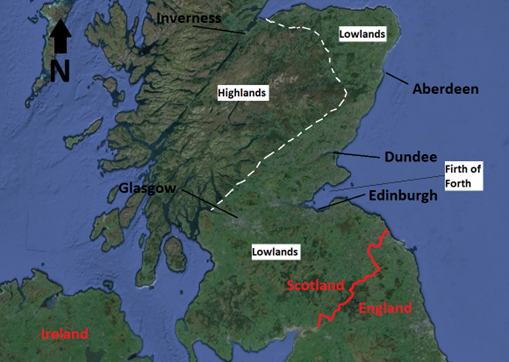
First recorded in Ayrshire in 1238, Lanarkshire about 1160 and Aberdeenshire before 1211, these names are thought to all be considerably older than any of these dates. The name Auchinleck and its many variants were found mainly in that area of the Lowlands south of the Firth of Forth until about the 15th century while Aghlek and its variants were found only to the north. The names began to slowly be blended into Affleck (or a variant of this) about the 15th century as contact with the English and their written language increased. Today, Aghlek and its variants has disappeared altogether, being wholly replaced by Affleck, while Auchinleck, sometimes replaced by and often pronounced as Affleck, remains in some few places in Scotland. Since the 12th century, there have been well over 100 different variations recorded in the spelling of Auchinleck / Aghlek / Affleck.
[1] Some of the many variants of the surname Affleck recorded over more than 800 years:
Achenlek Achirfck Achilike Achinfleck Achinlathan Achinlek Achinlak Achithlege Achithelege Achfleck Achlck Achlec Achleck Achlek Achtinlek Achtheleg Achynlek Aehynlec Affeck Affenlect Affleck Afflect Afleet Aflek Afflek Afflick Afflict Afflock Aghelek Aghleke Aghynlek Aiichenleck Aithinleik Aquinlek Athelek Athinkel Athinleik Athinlek Athlek Athlyk Athynlek Auchenfleck Auchenlcck Auchenleck Auchenlect Auchenlek Auchenlouke Auchetileck Auchimlek Auchinclech Auchinfleck Auchinleak Auchinlec Auchinlech Auchinleck Auchinlecky Auchinleclis Auchinleclt Auchinlfeck Auchinlect Auchinlek Auchinlick Auchinlcit Auchinloch Auchinlock Auchinlok Auchiuiek Auchlec Auchleck Auchlek Auchnlake Auchtlek Auchtleke Auchynflek Auchynlec Auchynlek AucJiinkelf Auckinleck Auflek Auflick Aufleck Auffleck Auhelit Aunynlec Auohinlock Aurhinleck Authinlect Authinlek Auunynlec Auuynlec Auunynlec Avthinlect Awchinlecke Awchinlek Awchlek Awqwhynleke Awqwhynleke Efflek Effleck Efflect Flack Fleck Flecke Flek Haghenlek Halfleck Hallflock Hauchynlek Haucynlec
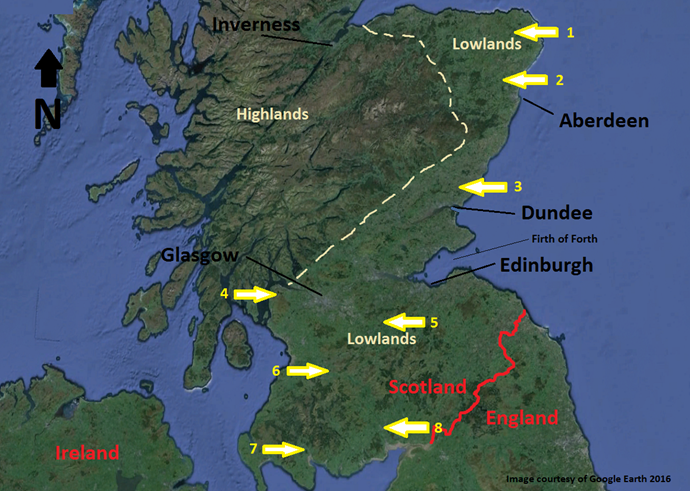
Site 1: On the Northwest edge of the village of Maud, Aberdeenshire. First recorded sometime before 1211 AD as the village of Auhelit. AI suggests that the site has been present since at least the 900s. Today, it is a small group of farms named the Mains of Affleck, West Affleck, and South Affleck.
Site 2: Located North and West of Aberdeen, close to the village of Whiterashes, just East of the A947 in Aberdeenshire. First recorded in 1255 AD as the village and lands of Achlek. AI suggests that this site is at least 1 or 2 centuries older than this date. Today it is a collection of farms and points named Affleck, North Affleck, South Affleck, etc.
Site 4: Located Southwest of Montrose Ave in the Southeastern suburbs of Port Glasgow, Inverclyde. First recorded in either the late 13th or early 14th century (it is unclear though AI suggests it could have been as early as the 1100s) this site contained a variety of farms or hamlets. These were named Auchenleck or Nether Auchenleck, Laigh Auchenleck, Mid Auchenleck, High Auchenleck and there is some evidence for others slightly to the West. Today, only High Auchenleck, a farm, remains.
Site 5: Located off the B7018 East of Lanark in Lanarkshire. First recorded between 1160 and 1180 AD (probably 1161) as the lands of Auchynleck, (later Auchinlec, Achithlege, Auchynlec and Auchinleck). It included perhaps as many as 15 small hamlets / settlements, amongst them the sites of Gillbank (Kilbank) which was the fiefdoms seat. AI suggests the area carried the name Auchynleck, or a variant, at least 300 to 600 years before 1161. Today it is remembered by a single farm called Affleck.
Site 6: Located in the area of Auchinleck in Ayrshire. This site was first recorded in 1238 or 1239 AD as Auchinlec (later Achithlege, Auchynlec, Affleck (by the English in 1747) and Auchinleck though it was known then to be much older. AI suggests the land carried the name long before 1238. In 1504 the lord Auchinleck of Auchinleck lost the property, and it was acquired by the Boswell family, they becoming Lords of Auchinleck. Thus, anything regarding the Barony of Auchinleck in Ayrshire after that date, 1504, has nothing to do with the Affleck name.
Site 8: Located approximately 20 kilometers North of Dumfries in the county of Galloway and Dumfries. Like Site 7 described above, this site is very old and almost nothing is known of it today. Variously described as the lands of Auchinleck or the ancient estate of Auchinleck (various spellings), it may have encompassed 25 (or possibly more) square kilometers just North of Closeburn and East of Thornhill. Various sources suggest it included the Townhead (of Auchinleck), Townfoot (of Auchinleck), Newton of Auchinleck, Benthead, Buttaview, Knockbrack and possibly other hamlets to the East.
The 1232 AD charter of Alexander II granting large portions of these lands to the Kirkpatricks of Closeburn (variously spelt), together with the quarrels between Closeburn and the fiefdom of Morton, owned by the Douglas’s to the Northwest, suggest that this Auchinleck, while once a fiefdom of some size, had, by 1232 ceased to exist and it was only the name of the lands which remained. AI suggests that a fiefdom, probably carrying the name Auchenleck or a variant, existed at least several centuries before that date. Today, while some of the farm names are still extant, only the Auchinleck Hill name remembers this ancient fiefdom.
What is today called Clan Affleck or, less frequently, Clan Auchinleck, is, historically speaking, difficult to find. No single name or territory connected the members. They were widely dispersed and generally based on relatively small families or family groups rather than any organized clan structure.
As was the custom for a great many smaller Scottish families or clans, they would often attach themselves to a larger clan thus, hopefully, assuring the support and protection such a larger clan could provide. For its part, the larger clan gained both prestige due to its increased size and more warriors when they took to the field. This practice was referred to as the ‘sept’ system with the small clan or family being regarded as a ‘sept’ of the larger clan.
While exact dates for the event are unknown, the Auchinlecks of Ayrshire (Site 6 on the map) are known to have been a sept of the Douglas clan by the 14th century. Indeed, it was the Douglas’s who, much latter in the 1400s, exacted a ferocious revenge against the family Colville for their attack on the Ayrshire Auchinlecks. Similarly, the Auchinlek family centered in Angus (Site 3 on the map) were a sept of the Lindsay clan by at least by the mid 15th century. Given the wide dispersal over the Scottish Lowlands of the family name, there may well have been others as well.
Today, Clan Affleck or Auchinleck is an officially recognized Scottish clan though, as one without a formal chief, an armigerous one. It is officially associated with the Clan Lindsay though why this is so, given its considerably older association with the Clan Douglas, is not clear.
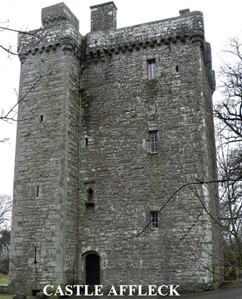
Scattered across the Lowlands, and over many centuries, there have been a number of fiefdoms of differing size held by some variation of the family name. These were located in Aberdeenshire, Angus, Lanarkshire, Renfrewshire, Ayrshire, Dumfriesshire and Kirkcudbrightshire. Today, there are no longer any Scottish estates held by any variation of the surname Affleck or Auchinleck, though the reduced Auchinleck estate in East Ayrshire and the Castle Affleck located in Angus constitute the remnants of two of them.
While there are a very large number of other heraldic symbols (particularly crests) which suggest some linkage with the Affleck and Auchinleck surnames or their many variants, the crest and arms seen here are those which, over many centuries, have most often been associated with the Auchinleck /Aghlek/ Affleck name. Research on this continues.
While many others exist, there are the two crests most often associated with the Auchinleck Afflecks.
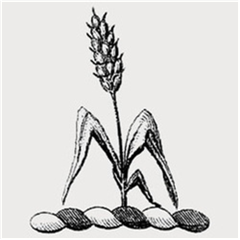
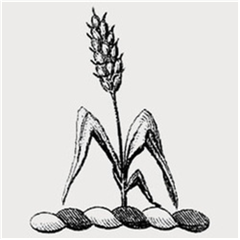
The Ear of Rye Crest
The Ear of Rye crest has been around since at least the 1400s, and almost certainly long before, and has been identified with the Affleck and Auchinleck family surnames in Scotland, England and Ireland. There exist a number of different versions which seem to be based mainly on region.
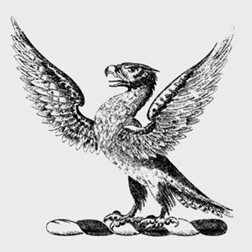
The Eagle Crest
The Eagle, sometimes with wings raised, other times folded, seems to have appeared later in the surname’s history. It is certainly associated with the McVicar-Afflecks but not by them alone, as it appears elsewhere.
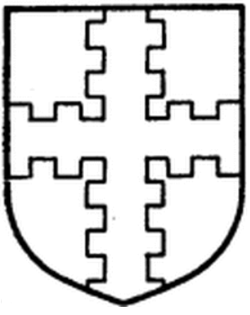
Arms
There are two principal arms associated with the surnames Affleck and Auchinleck. These are the Cross Embattled and the Three Black (or Sable) Bars.
The Cross Embattled
In Scotland only, the Cross Embattled is thought to be unique to the Affleck or Auchinleck family surname, first being noted there in the 1440s at Glenbervie in Kincardinshire. Variations suggest, but do not prove, that it is probably considerably older than that period. It is also found quartered on several other Scottish family's arms, notably one of the Clan Douglas. It has appeared in both Angus and Ayrshire and a variety of other Scottish locations as well as in Ireland.
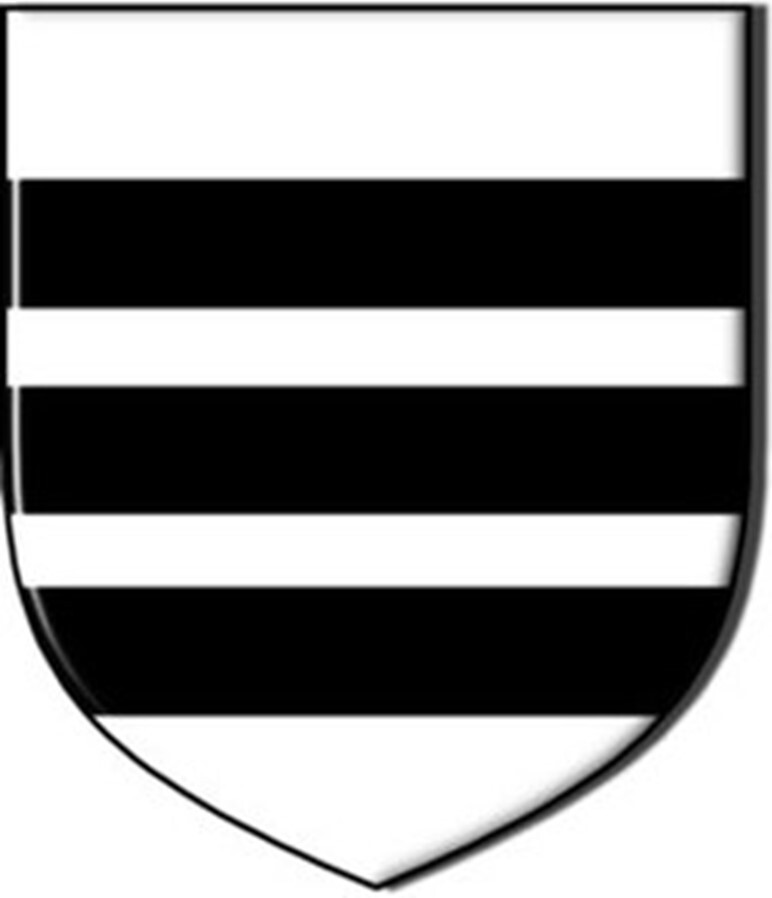
The Three Black Bars
The Three Black ( or Sable ) Bars are perhaps the more widespread of the two arms shown here, appearing not only on various Affleck family arms but quartered on several other family’s arms, notably the MacVicar's and the Boswells. Though noted as being associated with the Auchinleck name in Angus during the 14th or 15th century, the Bars were also held by the family surname in Ayrshire, possibly as early as the 12th century though that is not at all certain as yet. Where the arms appear in England, they are directly traceable back to the Auchinleck / Affleck surname in Angus where the English Affleck's believed themselves to have originated. No example of the surname's Three Black Bars has yet been confirmed in Ireland.